Key Takeaways
- Physical therapy in assisted living is personalized, on-site, and designed around each resident’s goals
- Therapy can help improve mobility, balance, and independence in everyday tasks, with sessions scheduled to fit naturally into community life
- Asking the right questions about what to expect helps you find a community with strong rehab support
- Therapy is most effective as part of a whole-person approach that includes nutrition and social connection
Rehab Support That Comes to Your Loved One
When a parent or spouse needs extra support after a fall, surgery, or a health setback, one of the first worries is: will they get the right help in time?
Coordinating outside appointments, managing transportation, and keeping up with therapy schedules can quickly feel overwhelming—for your family and your loved one.
Physical therapy and rehabilitation in assisted living can simplify all of that by bringing consistent, personalized care directly into your loved one’s daily life.
No long drives, no rushed visits—just steady, supportive progress in a place that already feels like home. Longevity Living at Godfrey weaves that kind of integrated support into how the community is designed to work every day.
What Does Physical Therapy Look Like in Assisted Living?
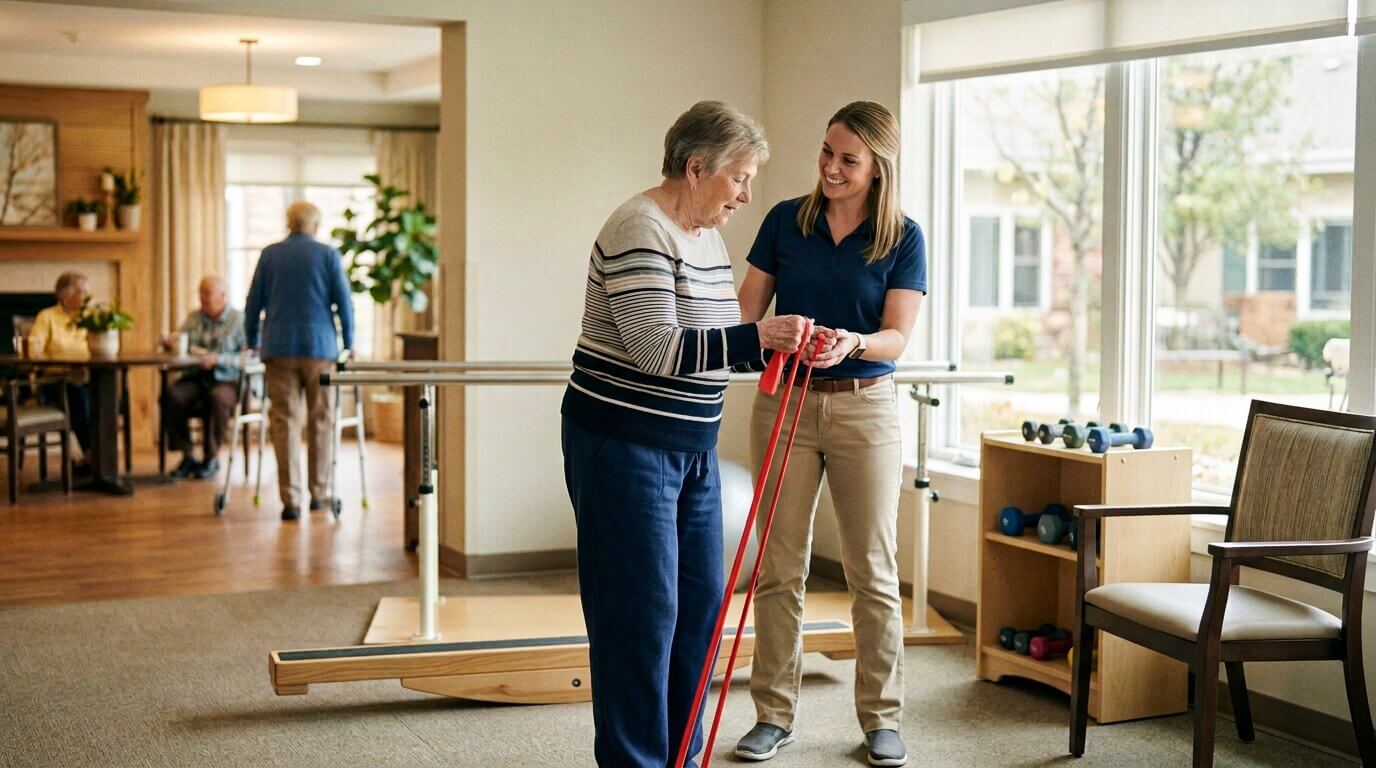
Physical therapy in an assisted living setting isn’t a one-size-fits-all program. Each resident works with licensed therapists to build a plan that matches their specific needs, whether that’s recovering from a hip replacement or simply moving through the day with more ease.
Therapy sessions are designed around 3 key values: comfort, dignity, and real progress. Your loved one isn’t rushed through exercises or treated like a number. They’re supported by therapists who understand where they’re starting from and where they want to go.
Having therapy available on-site makes a meaningful difference. Your loved one can go to a session without the stress of leaving the community. That consistency helps them show up more often, stay more engaged, and build momentum over time.
Key Benefits of Rehab Support for Your Loved One
Stronger Mobility and Balance
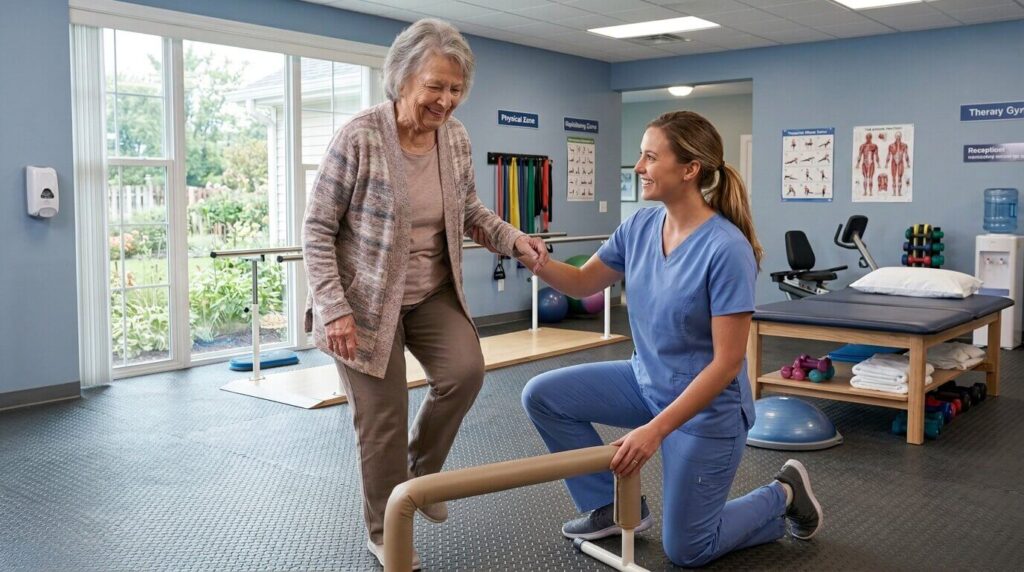
One of the most tangible benefits of regular physical therapy is improved balance. For many seniors, the fear of falling can quietly shrink their world—they stop walking to the dining room alone, skip activities, or stay in their room more often.
Muscle weakness and balance issues are among the leading contributors to falls among older adults. Targeted exercises can help rebuild the strength and coordination that make everyday movement feel safe again.
With consistent practice, your loved one can work toward things like walking steadily down a hallway, navigating stairs, or getting up from a chair without hesitation. These aren’t small wins—they’re the kinds of changes that help expand daily life and restore a sense of freedom.
Independence in Daily Life
Effective therapy doesn’t just happen on a mat; it’s connected to daily life. Therapists focus on the tasks your loved one actually cares about: getting dressed in the morning, reaching for something on a shelf, or taking a walk around the community after lunch.
These everyday moments are what the essential activities of daily living (ADLs) are all about, and they’re exactly what a strong rehab plan is built to support.
When therapy is tied to meaningful, everyday goals, progress feels personal. Your loved one isn’t just completing exercises—they’re reclaiming parts of their routine that matter to them. That kind of progress supports a more active, engaged lifestyle and reinforces their sense of self.
How Therapy Fits Into the Daily Routine in Assisted Living
A well-run assisted living community doesn’t treat therapy as separate from daily life—it weaves it in. The community team thoughtfully schedules sessions so that your loved one can still enjoy meals, activities, and social time without feeling pulled in too many directions.
Therapy teams and activity staff work together to keep things connected. If your loved one is working on walking endurance, for example, that goal can be reinforced during a group walk or a morning exercise class. Everything works in the same direction.
The team-based approach means nothing falls through the cracks. Therapists, caregivers, and activity staff are all aware of each resident’s goals. The support your loved one receives can be consistent from morning to night, not just during scheduled sessions.
What to Ask When Choosing an Assisted Living Community
Questions About Therapy Access
Not every assisted living community offers the same level of therapy support. Some have licensed therapists available on-site multiple days a week, while others refer residents to outside providers.
Ask directly: Is therapy available here, or will my loved one need to leave the community for appointments?
Ask how often residents can access therapy services and whether there are any limits based on insurance or health status. Knowing the details upfront helps you plan ahead.
If you’re still weighing your options, learning the differences in care levels between assisted living and a nursing home can help you decide which approach is the right fit.
Questions About Ongoing Progress
Ask how the team tracks each resident’s progress and how that information gets shared. An integrated community can walk you through how therapy goals are set, reviewed, and updated over time.
You should also ask whether family members are kept regularly in the loop. Knowing your loved one is moving forward—and hearing about it—can make a real difference in your own peace of mind.
A Whole-Person Approach to Senior Living and Rehabilitation
Physical therapy is more effective when its goals are part of a whole-person approach.
At Longevity of Godfrey, rehab support goes hand in hand with nutrition-forward meals, purposeful daily activities, and a community built around genuine connection. When your loved one’s body, mind, and social life are all being nurtured, the results can be remarkable.
Senior living can be so much more than a place to receive care—it can actively support a longer, healthier, more fulfilling life. If you’re exploring assisted living options for your loved one, schedule a tour to see how Longevity of Godfrey can help your loved one thrive.